


Cybersecurity now sits at the heart of business resilience. The threat landscape is evolving faster than many organisations can adapt, while the growing interconnection between technologies, operations and regulatory requirements is adding further complexity. Precise predictions remain difficult, but collective field experience can reveal recurring patterns and weak signals early enough for organisations to act.
Global reach, ground expertise
Every day, our customers share with us their challenges, priorities, transformation projects and cybersecurity concerns. Across industries, countries and levels of maturity, these experiences provide insight not only into evolving technologies, but also into the operational realities behind cybersecurity decisions. They reveal how organisations balance business objectives, regulatory requirements, operational constraints and resilience goals in an increasingly complex environment.
Intelligence built by practitioners
There are many cybersecurity reports, but this one offers another perspective: it is built by practitioners. Axians teams design, implement, operate and secure digital infrastructures every day. We work with our customers before, during and after incidents, helping them strengthen resilience and make cybersecurity easier to manage. Axians also draws on the operational experience of Actemium, the industry brand of VINCI Energies.
This report’s findings are grounded in customer engagements, delivery experience and lessons learned from real cybersecurity work. They capture critical customer pain points, core inquiries, and the patterns emerging across different industries and geographies. All examples have been anonymised, but the situations and insights behind them are real.
This intelligence was brought together by Axians’ cybersecurity experts, SOC managers and analysts, Threat Intelligence specialists, pentesters, security architects, consultants and cybersecurity business leaders from across Axians. By comparing their observations, the report distinguishes isolated developments from the broader shifts organisations should already be addressing.
From the lessons of 2026 to an action plan for 2027
Building on this collective intelligence, this report examines the developments that shaped cybersecurity in 2026 and the issues gaining momentum as organisations prepare for 2027. It translates field observations into practical actions across five areas:
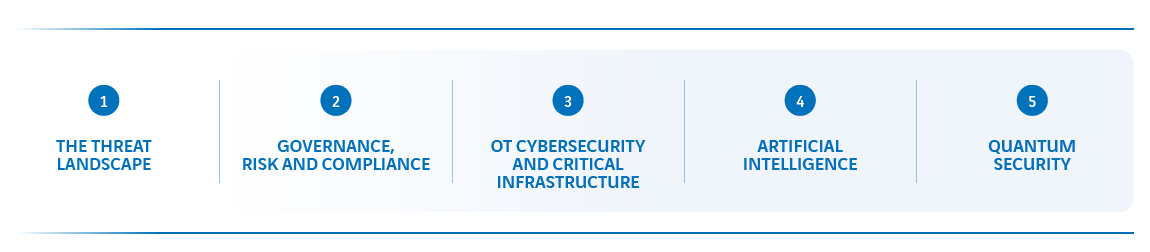
Identity-centric attacks, ransomware, data theft and AI-assisted cybercrime continue to put organisations under pressure, making the ability to withstand and recover from disruption as important as prevention.
At the same time, governance, risk management and regulatory compliance are moving beyond the IT department to become enterprise-wide priorities. Protecting OT and critical infrastructure also requires security measures grounded in the realities of industrial operations.
AI is reshaping cybersecurity by creating new capabilities for defenders while exposing gaps in visibility and control, particularly around shadow AI and autonomous agents. Looking further ahead, quantum computing may remain a longer-term concern, but organisations already need to understand their cryptographic exposure and begin preparing for a post-quantum future.
This report is an invitation for you to prepare, not a prediction exercise. Its objective is simple: to help you anticipate, get ready and act.